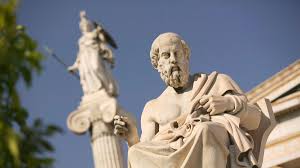
Writing two millennia apart, it’s no surprise that the political theorists Aristotle and Christine de Pizan have such diametrically opposed visions of political participation. After all, the pair were occupying very distinct spaces, both literally in a specific time and space, as well as their social positions as actors in the political landscape.
It is therefore interesting that both theorists rely on the spatial metaphors to naturalize political authority and engage in the rhetoric of political participation. In Aristotle’s Politics, the in-group/out-group dynamics of his ‘polis’ (city-state) stand in stark contrast to Christine de Pizan’s reimagining of the city in Book of the City of Ladies. Aristotle’s conceptualization of the city reinforces a hierarchy by aligning political capacity with an inherent biological and cosmic order, one that privileges male citizens and consigns women to subordinate roles, relying on natural arguments to justify political superiority of men. In opposition, Christine constructs a fantastical counter-city as an inclusive, allegorical space that challenges the deterministic arguments of Aristotle and the misogynistic tradition of politics.
Ultimately, this framework leads the two thinkers to have vastly different views on gender and its effect on human nature, virtue, and political capacity, revealing that while Aristotle regards these differences as divinely ordained and natural, Pizan envisions a transformative civic order where women and cultivated virtue redefine the very spaces of political participation. In this essay, I will first analyze how the city functions as a central metaphor in each text, reflecting the distinct socio-political spaces of Aristotle and Christine and their arguments. Next, I will examine their contrasting conceptions of human nature and how these inform their ideas of political authority. Finally, I will assess their views of virtue in order to ultimately conclude their respective arguments on gender and its effect on political capacity and participation.
Although the metaphor of the city is not as explicit in Politics as is the case in the ‘Kallipolis’ of Plato’s seminal text The Republic, Aristotle nonetheless clearly draws inspiration from his mentor’s imagined city in his dialogical writing. The opening sentence of Politics — “since we see that every city is some sort of community… that is most authoritative of all” (1252a1) — clearly frames the text through the lens of the polis as an “authoritative” metaphor. When he talks about politics, it’s clear that he is talking about “what is called the city or the political community” (1252a7), directly equating the titular political with the city. He further asserts that “it is evident that a city is among the things that exist by nature [and] that man is by nature a political animal” (1253a1). Therefore for Aristotle, the city is a natural, foundational phenomenon for humanity, and by extension, politics. Here, Aristotle’s insistence on the innate connection between the city and “nature” is notable as this implies an existing, inherent order. This idea of natural hierarchy even exists in Aristotle’s conceptualization of cities. The hierarchy of the household, village, then city serves as a further reinforcement of a prescribed natural hierarchy. He writes: “The household is the community constituted by nature for the needs of daily life… for the sake of non-daily needs is the village… The complete community, arising from several villages is the city… it exists for the sake of living well” (1252b11). The development of the community, and its roles in society are rigidly hierarchical. Considering the unwavering beliefs of Greek society in the natural order and the Greek gods — “for human beings assimilate not only the looks of the gods, but their ways of lives as well” (1952b26). Aristotle’s depiction of the polis not only reinforces these cultural convictions but also legitimizes the political structures that emerge from them as inherent and absolute.
On the other hand, Christine de Pizan, in the Book of the City of Ladies, deliberately appropriates the metaphor of the city to challenge the established political assumptions on gender. By drawing upon the tradition of Plato’s Republic and Aristotle’s Politics in using the city as a central metaphor, Christine draws legitimacy for her argument by evoking the political canon. Simultaneously, she subverts the metaphor of the city in order to back up her radical arguments. This subversion is reflected stylistically in her vivid and dreamlike language. For example, she recounts a moment of sudden illumination: “I suddenly saw a ray of light shine down on my lap like a beam of sunshine. Since it was dark in my room and sunshine could not be entering at that hour, I jumped as if I had woken from a dream, turning my head to see where the light was coming from” (23), where the beam acts as a metaphor for hope and change. By using this fantastical language, Christine radically redefines the space used by her predecessors into her own, thus setting up her own imagined space to make her arguments later in the text, distinct from the theme of the natural employed by Aristotle. Furthermore, the “beam of light” acts as a biblical allusion because like Aristotle, Christine’s work is heavily influenced by her social context’s religious beliefs. By drawing on Christian biblical imagery, Christine is further legitimizing her reimagined civic space as divinely ordained, positioning her allegorical city as a transformative alternative within her established religious framework. However, Christine’s city is not merely allegorical. She states, “I have built this city for you, dear women, not as a mere dream but as a testament to your enduring virtues” (30), reinforcing that her allegorical city is both a visionary construct and a practical call to reimagine political participation. Thus, Christine creates a new rhetorical space — one that is simultaneously ethereal and grounded in historical and theological conviction. Ultimately, the different ways in which the metaphors of the city are employed by Aristotle and Pizan as central motifs of their argumentative rhetoric reveal profound differences in their views on human nature, virtue, and the criteria for political participation.
At the heart of Aristotle’s Politics lies a view of human nature as fixed and closely linked to the natural order, and these conclusions inform his views on gender. Aristotle holds that differences in political capacity stem not from education or socialization but from inherent, immutable qualities. Aristotle imagines the relationship of humans to be ones of simple natural necessity; “one one hand…male and female, [exist] for the sake of reproduction (which occurs not from intentional choice but — as is also the case of animal and plant)… and on the other… the naturally ruled and ruled” (1252a 27). By relegating human relationships to that of plants and animals, Aristotle is using rhetoric that assumes relationships are the way they are without having to explain what nature itself is. This allows the thinker to justify later positions such as “For the male, unless constituted in some respect contarty nature, is by nature more expert at leading than the female” (1259b2).
A counter argument here could be that Aristotle seemingly implies that men and women share similar natural capacities — claiming, for example, that they “tend by nature to be on an equal fitting and to differ in nothing” (1259b3). However, as seen in his beliefs on the natural political capabilities of women, the practical application of his theory reveals serious contradictions precisely because what he believes as natural is never articulated. Most damningly, Aristotle writes “the relation of male to female is by nature a relation of superior to inferior and ruler to ruled” (1254b15) therefore making political participation a function of one’s natural endowment rather than a product of acquired virtue or learned behavior. For Aristotle, human nature becomes an undefined, unexplained catchall that allows him to justify the world as is — something that is seemingly absolute and inherent.
On the other hand, Pizan subtly presents a more flexible and transformative view of human nature. Christine first identifies the central issue of woman’s nature as something that has been created by thinkers rather than inherent; “Generally speaking, nearly all essays by philosophers, poets, and orators too numerous to mention offer a similar view and draw identical conclusions, describing female nature as beset by vice… I could find no truth in their condemnation of women’s nature and moral character” (22). Unlike Aristotle, Christine gives a tangible, historic origin of what society has perceived to be female nature — “philosophers, poets, and orators”. Therefore the idea of female nature becomes a contradiction, precisely because it is man-made rather than natural. Furthermore, Christine turns these traditional arguments on their heads, pointing towards a more positive and empowering picture of women’s nature, by using religious arguments that are seeped in the traditions of “philosophers, poets, and orators”. For example, she states “If the Divine Craftsman was not ashamed of the creation and shape of the female body, why would Nature be?” (36), thus putting the reader in a difficult position where they must either affirm the woman’s nature as natural, or argue against the creationist powers of God. By subtly juxtaposing misogynist arguments on woman’s nature by theorists with divine arguments, Christine builds a new and radical thought that the concept of nature is a biased, cultural phenomenon rather than innate, and thus has a capacity for transformation.

The two thinkers’ divergent views on gender extend beyond the descriptive aspects of human nature to the prescriptive realm of virtue. For Aristotle, virtue is not an abstract ideal but a functional quality that determines one’s suitability for political participation. He contends that “when separated from law and adjudication he [man] is worst of all” (1253a30) and further elaborates that “whoever is entitled to share in an office involving deliberation or decisions is, we can now say, a citizen in this city” (1275b20). In Aristotle’s view, active participation in the polis is essential for leading a virtuous life. However, this creates a paradox: women are unable to seek virtue through political office, as “the relation of male to female is by nature a relation of superior to inferior and ruler to ruled” (1254b15). Thus, while Aristotle argues that the best life is achieved through engagement in public affairs — where reason and moral excellence guide decision-making — this ideal is reserved for those who naturally possess superior rational capacities, effectively privileging male citizens and excluding women and slaves. In this way, virtue becomes a mechanism for reinforcing an immutable social hierarchy, ensuring that political authority remains the prerogative of those Aristotle deems inherently superior.
In stark contrast, Christine redefines virtue as a quality that can be nurtured and developed through education and moral effort rather than through exclusionary participation. She writes “The superior being is he or she who is the most virtuous. People’s superiority or baseness does not depend on their gender but on the perfection of their morals and virtues…” (37). Furthermore she assembles a rich tapestry of virtuous women from history throughout her text in order to reflect the capacity for women to be virtuous. For example, she employs the use of the Virgin Mary to assert the capacity for virtue in women; “Oh, how can a man be so ungrateful as to forget that it was a woman who opened the gates of paradise for him! It was the Virgin Mary, of course, and men can’t ask for a greater blessing!” (31) By once again relying on biblical references in these two extracts, Christine continues to use faith as a rhetorical device to strengthen her arguments on the capacity of women. Finally, Chrsitine asserts that inherent biological differences are in fact markers of further virtue in women: “it is a proven fact that women have weak and frail bodies, lack physical power, and are fearful by nature. In the eyes of men, these facts greatly diminish the position and authority of the female sex…this pleasant defect excuses them at the very least from taking part in the dreadful cruelties, the murders, and the terrible acts of violence that have been committed by force” (46). By showcasing these women, and their differences to men as essential building blocks of her allegorical city, Chrsitine challenges the deterministic view that limits political capacity.
Finally, the two thinkers’ thoughts on the intersection of gender, human nature, and virtue inform their ideas on women’s participation in politics in profoundly contrasting ways. For Aristotle, human nature is fixed and hierarchical, with inherent differences that determine political capacity, while virtue is something that women can not cultivate. Consequently, Aristotle’s framework justifies a political order in which women, deemed naturally inferior, are excluded from full civic participation. Here, a counter argument may be that he never explicitly excludes women as citizens in the entire text. However, he still asserts that “For a wife and children are both ruled as free people, but not with the same mode of rule. Instead, a wife is ruled in a political way, children in a kingly one” (1259a40), subtly relegating women to a similar infantilized level as children. In his system, the very notion of human nature and virtue serves as a mechanism to reinforce predetermined social roles, relegating women to domesticity. In stark contrast, Christine challenges this deterministic outlook by arguing that the qualities essential for virtuous political leadership are not fixed by nature but can be cultivated: “Most honored ladies, may it please you to cultivate virtue and run away from vice, increasing and multiplying our City’s inhabitants” (221). Here, the ability for women to have children is framed as a positive call to action. Her allegorical City of Ladies embodies an inclusive vision of political participation, where women are capable of achieving virtue but are also indispensable to the creation of a new civic space. For example,the use of militaristic language in the line, “I recommend that you assemble your army as quickly as possible, and take care that no one knows which way you are headed” (129) shows Christine’s hope that social norms can be changed, and allow women to actively engage new spaces in society.
Ultimately, the divergent metaphors of the city employed by Aristotle and Chrsitine reveal profound differences in how each thinker conceives human nature, virtue, and political participation through the lens of gender. For Aristotle, much of his arguments rely on a vaguely defined natural order, while Christine reimagines what this very order could be while drawing legitimacy from the political canon and her faith. The two texts can be read in tension to each other; Christine is literally responding and forming a new space in political writing and politics by subverting the city in Aristotle’s work.
Bibliography
Aristotle. 2013. Aristotle’s Politics. 2nd ed. Translated by Carnes Lord. Chicago: University of Chicago Press.
de Pizan, Christine. 2018. The Book of the City of Ladies and Other Writings. Translated by Ineke Hardy. Indianapolis: Hackett Publishing Inc.
 𓆰𓆪 Desolation Angel 𓆰𓆪
Leave a comment