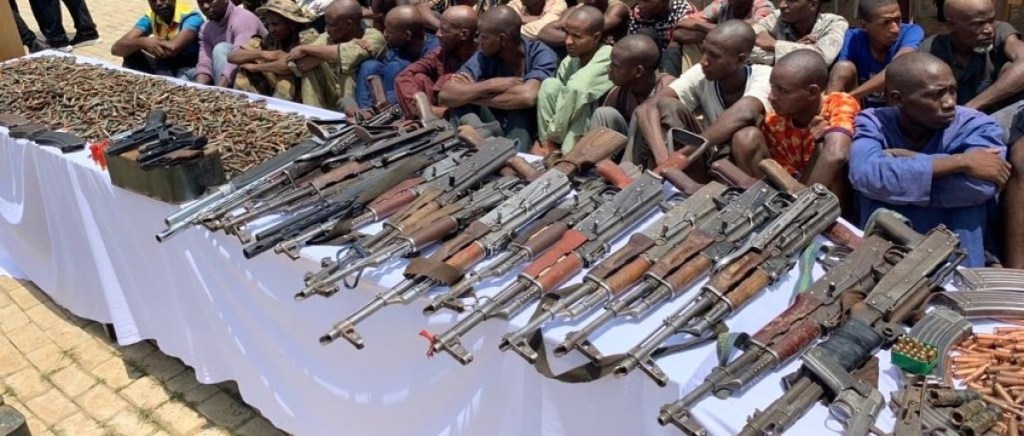
Despite having a 42% global market share of arms exports (Dyvik), the United States only accounts for 15% of arms imports in Africa (Karabektas). Instead, the weapons market in Africa is disproportionately occupied by Russian and Chinese imports. While making up 11% of arms exports, China is responsible for at least a quarter of all weapons imports in Africa (Raska and Blitzinger). The state of Chinese arms exports in Africa is notable for two reasons; first, arms dealings are aligned with recent economic and political headway being made into the African continent and can be seen as an extension of China’s economic strategy in Africa. Secondly, increasing Chinese arms dealings in Africa has the potential to signal the broader shifting power dynamics in the Global South from American and Western hegemony. Through an examination of the current scope and nature of Chinese arms deals in Africa, and comparisons to other Sino-African economic ties, this essay will examine the murky nature of existing literature on arms trade, how arms exports are aligned with broader Chinese interests in Africa and the Global South, and why Chinese arms deals deserve unique scrutiny in comparison to other economic trade in Africa.
China is the fourth biggest arms exporter in the world, behind the US, France, and Russia, and is responsible for 5.8% of global market share from 2019 to 2023. China has been “gradually positioning its arms exports as an instrument of its foreign policy to project presence, power, and influence (Raska and Blitzinger). Since 1999, China has undergone extensive modernization in the arms industry, primarily in order to become self-reliant in their weapons technologies (Tian et al). Raska and Blitzinger identify the two factors of increased defence spending and development of arms technologies that have allowed China to not only become self-reliant but also an exporter of weapons. Under Xi Jinping, improving arms capabilities and becoming self-reliant in arms as a priority have been made explicit through the domestic policy of “indigenous growth” named the Medium and Long Term Plan on the Development of Science and Technology” implemented in 2006. By pursuing indigenous innovation, China “aims to circumvent the costs of research, overcome international political constraints and technological disadvantages” (Rafka and Blitzinger). The effort for self-reliance is similar to China’s natural resource extraction, battery production, and agricultural efforts in Africa, where “resource security” and avoiding trade in tumultuous global markets marked by tariffs and scarcity is a priority for the state (Specter). Xi also frequently invoked Mao’s call for “self-reliance” in his public messaging of Gina’s international affairs (Arase).
China’s arms industry consists of 10 major arms companies and one research institute (Tian et al). The largest company, Aviation Industry Corporation of China (AICC) is owned by the superfluously named State-owned Assets Supervision and Administration Commission of the State Council (SASAC). All other companies are also owned by the SASAC or similar state actors, and thus China’s arms industry is synonymous with the CCP. Their overseas ventures can not be seen solely as profit seeking entities.
China’s arms deals are made exclusively with countries of the Global South. 85% of all Chinese weapons exports are made to states in Asia, while 10% are made to states in Africa (Wezeman et al). For African states, China is often a desirable suitor because they offer incredibly competitive pricing, flexible lending, and readily available weaponry, catering to the smaller budgets and diverse needs of African militaries (Hull et al). This competitive pricing that manifests as a result of China’s domestic labour power and industrial output is consistent with other Chinese ventures in the region. In the agricultural sector, states such as Rwanda and Uganda capitalise on the fact that “China’s agricultural technology is affordable” compared to “Western agricultural techniques and assistance” (Lawther). The same phenomenon can be seen in the mining sector, where in Indonesia, “The Chinese could build the plants so cheaply that they could make their money back within two years, whereas it would take a Western company up to fifteen years” (Sanderson). Cost is a central factor in dealings with cash strapped African LMIC states.
Another key “pull” factor for African states is the official Chinese policy of non-interference, applied to potential arms buyers, means that China will sell weapons and security equipment to a state without regard to its internal political situation or the repressiveness of the regime (Hull et al). China’s Global Security Initiative (GSI) saw Xi declare that China will respect “the sovereignty and territorial integrity of all countries, uphold non-interference in internal affairs, and respect the independent choices of development paths and social systems made by people in different countries” (Arase). Considering the GSI’s launch in 2021, and that China has been dealing arms with autocratic states The declarations of the GSI can almost seen as a reaction to China’s ongoing arms trade rather than a preemptive implementation of global strategy. Elizabeth Economy makes explicit how there is “significant momentum behind the basic principles and policies proposed in the GDI, GSI, and GCI among members of brics and the SCO, as well as among nondemocracies and African countries”. China’s arms dealings predate these new wave of initiatives yet it is nonetheless transparently clear that Chinese arms dealings are evidence of, and in line with the explicit global initiatives of China, and in fact may partially explain their popularity in autocratic African states.
More broadly, the state of arms deals in Africa exemplifies the US’s lack of involvement or investment in the Global South, and can be viewed as a broader shift of changing power dynamics in Africa. In the past year, states such as Niger, Burkina Faso, and Mali have all distanced themselves both economically and militarily from America and the West. China’s priority of self-reliance, then subsequent leveraging of industrial output to offer competitive pricing to states of the Global South, while simultaneously using economic ties to strengthen its broader global initiatives can be seen as a part of a pattern employed by industries across the board, not just in arms but in agriculture, surveillance, and resource extraction in Africa.
Like much of the academic study done on the Global South, current research on this topic often ignores relevant “pull” factors of African states and treats Africa as a hegemony. Furthermore, the political and military sensitivity of arms dealings also results in significant information problems on both sides; African states – especially those with weak institutions – are unlikely to desire or even have the capability to report accurate numbers. China on the other hand are also unlikely to disclose their dealings, especially considering their sensitivity to public perception “as part of a narrative of a strong, helpful, and lauded Chinese state” (Fung). Any public indication that China is funding violent oppressive states would be disastrous for international optics. This idea has historical precedence. China funded arms to Sudan and contributed to the Darfur genocide in 2007, for which they faced significant international backlash (Shinn). This also had material effects, where Chinese companies that had been looking for oil in Southern Kordofan province had employees kidnapped and killed by armed rebels China funded (Shinn).
Furthermore, Beijing has reportedly not submitted any arms export data to the U.N. Register on Conventional Arms since 1996 (Thrall). There is no official Chinese data on arms exports (Tian et al). Another significant issue is the existence of black and grey markets, and the impossibility of knowing their market shares. Overall, there is a severe lack of quantitative and academic research in arms dealings in Africa.
Despite these significant gaps in research and inevitable information problems, the presence of China in arms deals in the region is undeniable. The academic discourse surrounding Chinese arms dealings in Africa are largely split between “alarmists” who tend to present China as a threat to global and regional security disrupting and influencing the region for its personal gain, and those who argue that China’s arms dealings are declining in the region and is not part of a broader geopolitical strategy. More “alarmist” scholars use statistics such as in 2018, China’s arms sales increased, continuing a trend that enabled China to become the world’s fastest-growing arms supplier during the past 15 years (Cordesman et al). American based institutes such as RAND frequently emphasise China’s increase in defence spending since 2000, reporting that China is “likely the largest single supplier of small arms and light weapons to Africa”, citing (Thrall). More balanced scholars note how while China’s defence budget increased at a rate far exceeding that of any other major power in the 2010’s, spending is roughly consistent with GDP growth (Liff et al). In fact, the post-1978 period of rapid growth in China’s official defence budget has been outpaced consistently by even faster increases in overall state financial expenditures (Liff et al). Statistics such as the fact China is the largest arms supplier to Africa (Hanauer et al) is contested as others report Russia and France as the number one and number two in arms apply to Africa (Karabektas). Despite the general alarm that Chinese arms exports are increasing, the share of global arms exports from China has only grown by 0.1% over the decade of 2010 (Wezeman et al) while weapons imports by African states overall have actually decreased by 52% (Wezeman et al). There is no clear statistical consensus on the exact quantitative state of African arms dealings.
The significant information problems are compounded further by the ubiquitous biases in Global China studies. The tendency to memeify and “Other” China in Global China studies applies to arms deals in the same way that debt traps and land grabs have been in the past (Brautigam). Last month, The Economist published the article “Chinese weapons are taking over in Africa” while clearly presenting China as “the Other” in its portal of Chinese arms dealings. On the surface, China’s economic arms dealings in Africa can be seen to be vilified by the West and the broader international community. In 2019, Mike Pence criticised the Chinese regime for exporting “the very same technological tools that it uses in its own authoritarian regime” referring to arms and surveilancetechnlgies (Hendrix). While these biases and Western perspectives are important in a balanced view of Chinese arms deals in Africa, the arms trade is unique in the necessity for scepticism and doubt. Especially considering Beijing’s history in complicity in the Darfur genocide and the Ethopian-Eritrean civill war by supplying illegal weapins, and the capacity of Chinese weapons in genocide, the intentional lack of transparency must be viewed with scepticism and made distinct from China’s other economic investments and trade in Africa. The fact remains that arms sales are unique in being significant predictors of increased political violence in Africa (Craft et al). While “whataboutism” concerning Russian, American, French, and other arms dealers in Africa are hard to avoid, as it pertains to China, the fact is they have and are arming repressive autocratic regimes, such as Zimbabwe, Sierra Leone, and the DRC can not be defended even when removing Chinese “othering” bias.
Despite these concerns, there is potential for a more positive narrative to emerge. China could leverage its influence to promote regional peace and security in Africa. For example, Chinese weapons in Nigeria are used to help combat domestic threats such as the Islamic State West African Province (Abdullahi). This could involve supporting initiatives for conflict resolution, encouraging greater transparency in arms sales, and collaborating with international actors on responsible arms trade practices. China’s capital interests in the region have allowed them to be effective mediators in Africa. China’s economic desire for oil allowed the state to act as peacekeepers between Benin and Niger (Ibukun and Höije).
In conclusion, China’s presence in Africa’s arms market presents a complex picture. Chinese arms deals in Africa should be studied as part of a broader economic and political strategy in the Global South. While concerns exist regarding lack of transparency, potential for fueling regional conflicts, and enabling repressive regimes, China’s economic ties and political influence also offer opportunities for a more positive narrative. Unfortunately, the caliginous nature of arms dealings means that there are still significant gaps in research and information problems are likely to persist in any further research.
Works Cited
Abdullani, Murtala. “Analysis: Russia Sanctions Could Spur Chinese Arms Sales to Nigeria.” Al Jazeera, Al Jazeera, 1 Apr. 2022, http://www.aljazeera.com/features/2022/4/1/ukraine-war-sanctions-could-boost-chinese-arms-supply-to-nigeria.
Arase, David. “China’s global security initiative: Narratives, origins and implications.” Southeast Asian Affairs 2023, 17 Apr. 2023, pp. 34–50, https://doi.org/10.1355/9789815104189-004.
Brautigam, Deborah. “A critical look at Chinese ‘debt-trap diplomacy’: The rise of a meme.” Area Development and Policy, vol. 5, no. 1, 6 Dec. 2019, pp. 1–14, https://doi.org/10.1080/23792949.2019.1689828.
Cassidy Craft and Joseph P. Smaldone, “The Arms Trade and the Incidence of Political Violence in Sub-Saharan Africa, 1967–97,’’ Journal of Peace Research, Vol. 39, No. 6, 2002.
Cordesman, Anthony H., et al. “China’s Shifting Balance of Arms Imports and Exports.” China and the U.S.: Cooperation, Competition and/or Conflict An Experimental Assessment, Center for Strategic and International Studies (CSIS), 2019, pp. 235–53. JSTOR, http://www.jstor.org/stable/resrep22586.23. Accessed 19 June 2024.
Dyvik, Einar H. “Defence Export by Country 2023.” Statista, 22 May 2024, http://www.statista.com/statistics/267131/market-share-of-the-leadings-exporters-of-conventional-weapons/.
Fung, Courtney J. “Providing for global security.” Global Governance: A Review of Multilateralism and International Organizations, vol. 25, no. 4, 10 Dec. 2019, pp. 509–534, https://doi.org/10.1163/19426720-02504006.
Hanauer, Larry, and Lyle J. Morris. “Intertwined Interests of China and Africa.” Chinese Engagement in Africa: Drivers, Reactions, and Implications for U.S. Policy, RAND Corporation, 2014, pp. 5–18. JSTOR, http://www.jstor.org/stable/10.7249/j.ctt6wq7ss.9. Accessed 19 June 2024.
Hendrix, Cullen. Arms and Influence? Chinese Arms Transfers to Africa in Context , The Peterson Institute for International Economics, http://www.piie.com/blogs/realtime-economic-issues-watch/arms-and-influence-chinese-arms-transfers-africa-context. Accessed 19 June 2024.
Hull, Andrew, and David Markov. “Chinese Arms Sales to Africa.” Institute for Defense Analysis, http://www.ida.org/-/media/corporate/files/publications/researchnotes/rn2012/2012-chinese-arms-sales-to-africa.ashx?la=en&hash=616C509520DC1A3EDA059E0C2C24657B. Accessed 19 June 2024.
Karabektas, Selcan. “Russia’s Growing Military Footprint in Africa: Arms Deals and Defense Cooperation.” Russia’s Military Expansion in Africa: Arms Sales, Bases, and Wagner Group, http://www.orionpolicy.org/orionforum/255/russias-growing-military-footprint-in-africa-arms-deals-and-defense-cooperation. Accessed 18 June 2024.
Lawther, Isaac. “Why African countries are interested in building agricultural partnerships with China: Lessons from Rwanda and Uganda.” Third World Quarterly, vol. 38, no. 10, 16 June 2017, pp. 2312–2329, https://doi.org/10.1080/01436597.2017.1333889.
Lee, Ching Kwan. The Specter of Global China: Politics, Labor, and Foreign Investment in Africa. University of Chicago Press, 2020.
Liff, Adam P., and Andrew S. Erickson. “Demystifying China’s Defence Spending: Less Mysterious in the Aggregate.” The China Quarterly, no. 216, 2013, pp. 805–30. JSTOR, http://www.jstor.org/stable/24741776. Accessed 19 June 2024.
News, Bloomberg. “Benin Set to Allow Niger Oil Shipments after China Intervention – BNN Bloomberg.” BNN, 30 May 2024, http://www.bnnbloomberg.ca/benin-set-to-allow-niger-oil-shipments-after-china-intervention-1.2079207.
Raska, Michael, and Richard A. Bitzinger. “Strategic Contours of China’s Arms Transfers.” Strategic Studies Quarterly, vol. 14, no. 1, 2020, pp. 91–116. JSTOR, https://www.jstor.org/stable/26891885. Accessed 19 June 2024.
Sanderson, Henry. Volt Rush: The Winners and Losers in the Race to Go Green. Oneworld Publications, 2023.
Shinn, David H. “China and the Conflict in Darfur.” The Brown Journal of World Affairs, vol. 16, no. 1, 2009, pp. 85–100. JSTOR, http://www.jstor.org/stable/24590742. Accessed 19 June 2024.
Thrall, Lloyd. “Chinese Presence and Behavior in Africa.” China’s Expanding African Relations: Implications for U.S. National Security, RAND Corporation, 2015, pp. 21–74. JSTOR, http://www.jstor.org/stable/10.7249/j.ctt15zc655.10. Accessed 19 June 2024.
TIAN, NAN, and FEI SU. “ESTIMATING THE ARMS SALES OF CHINESE COMPANIES.” Stockholm International Peace Research Institute, 2020. http://www.jstor.org/stable/resrep24475.Wezeman, Pieter. Trends in International Arms Transfers, 2023, Stockholm International Peace Research Institute, http://www.sipri.org/sites/default/files/2024-03/fs_2403_at_2023.pdf. Accessed 19 June 2024.
 𓆰𓆪 Desolation Angel 𓆰𓆪
Leave a comment