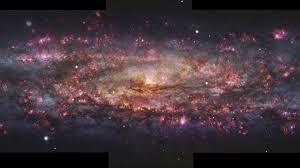
The first missile fired in WWIV was not a missile at all, but rather a rocket.
And this missile which was not a missile at all but rather a rocket was not aimed at Karachi, or Dresden, or Pyongyang, or Taipei, or Hiroshima, or Moscow. It wasn’t aimed at the Hexagon, or at the missile silos that dot the desert of New Mexico, or even at the ruddy-faced bureaucrats of Washington DC (no matter your opinions on whether they would deserve it or not).
This missile was instead aimed straight up, right up past the clouds, through the stratosphere, past the few moons of Jupiter, and beyond the solar system to Proxima Jeanneau 49.
Just as well too, because it was the general opinion of much of the Earth’s people (although crucially not all) that it would be quite absurd to point missiles or rockets or missiles that were not missiles at all but rather rockets at Karachi, or Dresden, or Pyongyang, or Taipei, or Hiroshima, or Moscow. Or even Washington DC.
“Thank the Lord for a successful McLaunch. May God bless your souls and God bless America.” It was a quick and pallid affair. President Berhalter had sniffled as he watched the missile blast through the eye of a hurricane, tracing a seraphic arch through the stormy heaven and into the starry dynamo.
It was the only missile fired in all of WWIV, not counting the apocalyptic missile that was very much aimed at Moscow, fired just a few hours after the first of the zero missiles fired in all of WWIV. Unfortunately, the McFatBoy aimed at Moscow prematurely exploded a few kilometers out from its silo in New Mexico, doing no damage, save for the flattening of an array of communication relay satellites lining the dunes of the Chihuahuan. Plus, the destruction of about 23% of the desert’s wildlife, but they were already a few generations away from serious reproductive anomaly via the base’s chemicals upstream, and the fracking downstream, so a moot point, especially cosmically.
It was the greatest military disaster of all time and an immense tactical blunder. Naturally, quite a few generals and politicians were promptly promoted as a result. The event would have been later dubbed as the ‘New Mexican Missile Miracle’ had knowledge of this accident been leaked to the international community. Conspiracy theorists would have blamed their least favourite branch of government. President Beralhter believed genuinely in God for the first time in his entire life that day. Nobody in the world knew that a missile had been launched, let alone two.
The post-hurricane mist cast magnificent rainbows that hung still above the desert space, shining through the thick smoke that reached for the sun.
“It seems like they’ve taken out our comms. I heard a devastating explosion and static. Everything’s gone cold,” said Captain Nora McSmith from the window of the assembly hall at the hull of the missile, which was not a missile at all but rather a rocket called ERC-1 (Earth Reconstruction Colony). “That’s why we’re here. We must cooperate,” said Captain McSmith valiantly, stifling her tears for the sake of her crew. “Eyes ahead to Proxima Jeanneau 49. Do not look behind, there is only suffering.”
It was remarkable leadership and poise on her part, especially considering that the crew on the ERC-1 were now the last survivors of humanity, desolate in the dark, cold, and otiose universe. Unlike on Earth, there is only anarchy amongst the stars. “We are now the last survivors of humanity, desolate in the dark, cold, and otiose universe. Unlike on Earth, there is only anarchy amongst the stars,” announced the Captain to her crew assembled in the rocketship’s assembly hall. Those who were manning their respective stations heard the speech through the public comms channel. Captain McSmith felt a strange sense of temporal displacement wash over her. Also an intense desire to shape humanity to be its best, to show that cooperation and institution-building can avoid the fate of her old home. “We only have each other now. We must unite, to cooperate, to establish the institutions that will save our species for eternity.”
Back behind on Earth, President Berhalter and President Akinfeev jointly received the Nobel Peace Prize. It was thoroughly deserved! They had just averted the nuclear apocalypse through nothing but a phone call and shrewd negotiation for crying out loud. After years of intelligence and counterintelligence, tense tariffs and suave trading, domestic spats and international affairs, and of course, the century of an imminent, inevitable, and radioactive global holocaust, not a single missile had been launched. The pair had saved mankind from what for a long while had seemed to be an inevitable bloodbath. War was on a knife’s edge, and so was peace, as it turns out. Rationalism prevailed, despite hallucinogens and infidelity, psychosis and aliens, computer errors and human slips, etc, etc, etc.
The ultra-wealthy and the ultra-paranoid slowly emerged from their bunkers with their tails between their legs. Pictures of Presidents and scientists and authors and athletes and pop stars of all nations and races and genders shaking hands were all you could find on glossy advertising billboards and trending pages and the ticker scroll of the 24/7 news reels. In celebration of the world’s population forgoing the painless process of being turned into shadow, every single nation was declared the winner of the next three World Cups. President Berhalter and President Akinfeev’s duet of The Beatles’ Imagine charted first in every country with radio or internet for sixteen consecutive months.
Simultaneous to the numerous and liberal parties being thrown across the continents, clandestine reconstruction of the damaged array of communication relay satellites was underway at a relatively remarkable pace. It was imperative that they get hold of Captain McSmith and inform her that the situation on the ground had changed.
Unfortunately, reconstruction was hindered by the ERC project’s extreme and resolute secrecy. The world’s unprecedented state of international cooperation meant that other states in the world would have been more than happy to exert their respective resources to help get back in touch with Captain McSmith, but in doing so they would find out about the ‘New Mexican Missile Miracle’ and thus undo the world’s unprecedented state of rational, international cooperation.
Ironically, the mission was a joint venture of international space agencies, and the world’s citizens were well represented in the crew. President Berhalter was particularly pleased at the collaborative nature of it all, and even prouder that the mission control was based in the US, and English was the only official language, and Uncle Sam had foot the bill, and American McCulture dominated the ship’s entertainment, and the States had deployed their secretive agencies to build and enforce the secrecy of the project, which did not include any forms of coercion or violence to enforce. ERC-1 was the modern international dream — stable and safe; this missile, which was not a missile at all but rather a rocket, that luckily only America knew about.
With each passing day, ERC-1 was inching further and further away from Earth, and the cosmic background radiation got louder, necessitating a bigger array of communication relay satellites, but the bigger satellites required more material and labour to construct.
ERC-1, which was at this moment slowly inching past the moons of Jupiter, was shielded from the very much harmless cosmic background radiation and the concoctions of the other very much harmful rays that zig-zagged space by the state-of-the-art diamond-titanium alloy that coated the ship. It was a sleek, lithe, and elegant machine that was designed to resemble a missile, and about the size of an opulent cruise boat. In constant rotation to maintain centrifugal gravity, the rocket housed a crew of 150 daring astronauts; although this number would fluctuate in the coming years for a hatful of reasons, a prudent one being the number of long-term hibernation pods that were in use at any given time. Another was the status of the frozen genetic material stored in the medical bays, enough to repopulate the new colony, more than enough to repopulate ERC in the event of the crew not taking to each other romantically, or to tank a hit from an epidemic of space madness.
On New Year’s Day of 2121, reconstruction of the satellites was complete. The project had greatly benefited from the bisectory budget cuts to the newly-dubbed Triangle, now partially obsolete with all the cooperation going around. Mission Director Dr. Joanna Rogers rushed back from those lavish parties of that era, feigned sobriety, and passed the all-important microphone to President Berhalter, who was not feigning sobriety in the least, to get the message online.

“There is no war! Return immediately to Earth! Job well done!” he bellowed into the microphone. He then turned to Dr. Rogers, winked and mouthed ‘for the cameras’ and bellowed a supposedly morale-rousing, sleazily pitch-imperfect, partially Russian, improvised falsetto solo intertwined rendition of Imagine. Dr. Rogers looked around the room for someone to stop him, realized she was the only other person in the room and astutely and discreetly turned off the recording before the President reached the final verse. The audio file passed through the microphone, the sound waves tossing and turning as electrical signals through wires and transmitters, dancing in the top-secret phase-shift keying modulator, encoded into a radio frequency, processed by converters, boosted by amplifiers, orbit the parabolic dish, those big sine waves and arches, trying to fill the void, over and over again.
Faintly crackling through his audio equipment, Communications Officer Emil Pettersson heard the divine message some millions of moments away.
“No… return… Earth… done … imagine there’s no heaven… imagine there’s no countries… imagine no possessions…!!” followed by a terrible, wounded, screech that made Officer Pettersson’s skull crawl. A religious fanatic? Some kind of survivor scientist leaving the last words of humanity to the cosmos? Articulate zombies under attack? Officer Pettersson moved the audio files into spam as he imagined the flesh of his high school friends back home slowly roasting in the apocalypse. He spent the rest of the shift poking at his nutrient jelly, staring blankly into space from his cubicle.
It was an impossible situation for Dr. Rogers. She did not have the political power to demand much from anybody higher up in the command chain. Colleagues were dispersed from Honolulu to McMurdo station, emails and calls were bounced, nefarious and innocent forces blocked signals and rearranged letters (A’s often disappeared). Most infuriating of all was the notice in her invitation that informed her she was not authorized to know anything about her own classified project. The Lunch Party turned out pretty miserable, career bureaucrats, fast-food lobbyists, and federal project managers who each thought the party was for themselves, milling about to congratulate each other and Dr. Rogers on a job well done. The evening ended in a fifteen-minute standing round of applause for which nobody knew what they were clapping for, and most assumed it was for themselves.
The government, the government’s government, and the secret government all assumed the other was handling the project. It was in the nature of their business that big stacks of cash and projects with ominous nicknames were to go missing. But at the core of it all was a tacit understanding of grade-school arithmetic; what was 150 lives against everlasting peace? This was the game, and it had been solved for all time. What were these lives at this moment? It was hard for Dr. Rogers, devoted to pure science and utilitarian calculus, disagrees. With each passing day, each party, each pay stub, each treaty, the math got easier. The ERC had already begun its departure from the orbit of the war-hero scientist’s consciousness, amidst the nebula of marijuana smoke and pitchers of chilled wines.
From outside in space, it seemed the ship was hardly moving, the silent boosters glowing steadily like the vast tapestry of supernovas and Milky Ways, pushing along this tin can time capsule. Naturally, ERC-1 was equipped with everything you would ever need to start a civilization and then some, including but not limited to a theatre, an observatory/library, a concert hall, a floor of hydroponic farms, a complex water retention and recycling filter system, and a McDonald’s (they had secretly sponsored part of the launch). Considerable cost had been invested in the construction of the ERC-1, and even more on keeping it all under wraps. The fake World Cup final in which the teams competed for nothing but a trophy that wasn’t even gold, a planet-wide, two-minute blackout that enraged these fans, and the artificial hurricane, all designed to mask the ERC’s launch, had incurred significant costs. Of course, operating in the face of an impending apocalypse, money didn’t mean much, and the government, the government’s government, and the secret government all held a hedonistic position when it came to spending at the time. Humanity was at stake after all. The McDonald’s lobby helped too, although the utmost secrecy was kept regarding the specifics of the sponsorship. Where the money went didn’t really matter, it could be a dark well in New Mexico for all anybody cared.
Back on Earth, things were going swimmingly. By the time Captain McSmith and co had left the solar system, they had cured cancer through unilateral cooperation, and were halfway to discovering a cure for space madness. Once Earth had rationally figured out the World Cup was a construction, that these nations were really competing for nothing much at all, that these athletes were just actors, and that every team could win…
Dr. Rogers passed away peacefully in 2190. She slipped away mumbling about some rocket, according to her children. Her final words on Earth, “Bring back Nora McSmith…I was chicken shit… people need to know the truth…” are now lost to time. The auto-censor machine on the 17th floor of the Department of Obituaries of the New Federation Times threw ERC-1 and related words into the infinite bin of ones and zeros. On the week of 2150 April 4th, page 7 the Friday edition of the New Federation Times read: Esteemed government scientist Dr. Joanna Rogers passed away at 190. Final words of a lifetime McDonald’s fan: “Bring back… McChicken…” and that was that, words, rocket ships, and theories losing out to the entropy of code and time.
The McChicken supplies had long ago dwindled onboard ERC-1, much to the dismay of the crew. At any given time onboard, there were 10 astronauts awake, rotating every month on a rolling basis. There were maintenance repairs, hydroponic farming, cleaning, fast-food service, middle-managing, and record-keeping work available around the clock. The universal, standard kind of work, even up here. At the tip of ERC-1 was the control centre, half an observatory/library and half a control room for the Captain and the navigational crew. It was quiet these days on the ship. After leaving the solar system well behind, the ion engines had reached max acceleration, and from here until forever it was autopilot, only the unidirectional spin, gliding through blackness like a bullet, Zeno and Fermi and Olbers be damned, simply names in vast databases.
From his cubicle in the control room, one night cycle, Sensor Technician Jean Proulx stared into the lime green radar display, the fluorescent arc emanating from the rocket’s position in a steady rhythm, as Jean tapped his foot to the beat out of habit. Three-quarters into his shift — nobody would ever believe this absurd tale — Proulx swore on all that he knew that a bright gold record, one of those inventions you’ve heard of but never actually seen, from your great-grandparents’ age, had gone whizzing by the big window of the control room. In the brief flash of the UFO, he swore he saw esoteric alien writing on the disc, some kind of divine diagram. He suddenly began to feel very ill. The crew voted that this UFO did not exist.
Coincidentally, about six generations later, amidst the second bout of a really bad case of space madness, Engineer Ayo Zuberi, who was at that time still a small child, would swear on all that he knew that he saw starships, magnitudes larger and faster than ERC had gone whizzing by in the horizon. He was reassured that he was seeing shooting stars.
Though equipped with cryo-sleep technology, the crew would have to copulate for a fair few generations while the rocket blasted along. Whenever it was Captain Nora McSmith’s turn in the sleeping chamber, she would recall that last conversation on Earth, the brief words exchanged with Joanna as the scientist secured the straps on her flight suit.
“I don’t want to die.”
“I don’t want to go.”
“At least you’re not going to burn to a crisp, hair nails popping from fingers, the molecular rearrangement of your eyeballs, etc, etc, etc.”
It was never pleasant to awake from the deep sleep. The slumber in these machines was so dreadful and full of paralyzing nightmares that the pod flooded your receptors with amphetamines as you drifted into consciousness. Whenever it was Captain McSmith’s turn on active duty, coming out of grogginess, she would faintly recall that conversation on Earth with Joanna.
“I don’t want you to go.”
“I don’t want you to die.”
The sleeping pods reminded Captain McSmith of her grandma back on Earth, strapped to the sickly white bed, tubes appearing from wall sockets and dangling from ceilings, emanating fluorescent lights, the waft of urine and bleach. Taking it all in to the count of the IV drip, the steady beeping, the parabolic arches of the screen, emanating a cryptic subtext amidst the sequence on the dark liquid monitor. Her grandma slowly shimmering, limbs stretching and succumbing to the entropy. She remembered the machine going haywire, the world asymmetrical at the snap of the fingers, the parabolic lines twisting to form a hand, jumping out and dragging her grandma into the void, reaching for the Captain’s collar, shaking her body…
“Captain Smith! Something’s gone terribly wrong with some of the crew…” it was Chief Medical Officer Michiko Fukuyama shaking her awake in a panic. “I’m sorry ma’am. There simply isn’t an SOP for this insane human behaviour in the handbook!”
The captain was an octogenarian by the time the worst bout of space madness rolled around, almost the same age as her grandmother. Dr. Fukuyama slowly helped her out of the pod. Even the reduced gravity would still have to come claim neurons and hip bones, prefrontal cortices and gallbladders. The long decades of being in charge showed most obviously in her eyes, searching constantly in the ship full of longing for something else, anything.
Out in the communal areas of the spaceship, it was pure anarchy.
A couple of Bio Team astronauts had woken each other up and were harassing the poor McDonald’s attendant, whose synth-milk machine had broken down for a few minutes.
In the library, a couple was in a fist-fight over a debate about the merits of neorealist Italian cinema. A well-respected Sensor Technician was completely nude, fully spray-painted head-to-toe in the golden engine lubricant, doing cartwheels up and down the narrow hallways.
For the first time up in space, Captain McSmith felt an euphoric sense of calm and understanding about the universe. With a grin, she slipped the gaze of Dr. Fukuyama amidst the chaos, limped towards the very back of the ship, passed through the secure airlocks, and nosedived like a sleek weapon into the gossamer constellations and tangles of phosphorescent cosmos, so vivid and serene that it made beauty obsolete.
Unlike what she had been told all her life, space was warm.
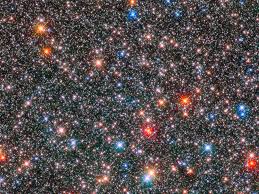
Neo-Sicknesses, Space Category IV, Entry I
Disease:
Space Madness (aka Smith’s Disease, State of Nature Syndrome, McLosin’ It, Star-Gazing, Gold Disk Syndrome, Looney Tunes, etc, etc, etc.)
Symptoms:
Temporal Disorientation, Violence, Paranoia, Miscommunication, Jealousy, Semiotic Delirium, Extreme Happiness, Extreme Sadness, Extreme Lack of Emotion, etc, etc, etc.
Cure:
Unknown, Curable
Mortality Rate:
Unknown [Notable Deaths: Captain Nora McSmith]
Possible Treatments:
Drugs, Sex, Time, Isolation, Group Think
History:
Unknown. [First Outbreak 2432]
Doctor’s Note:
Most likely psychological, space madness can strike at any time and to anyone who has been in space long enough. According to speculation, it’s caused by an extreme and unavoidable sensation of existence, and/or a spiritual malaise, and/or resolute boredom. Rumoured catalysts include exposure to an “other” existence outside ERC (unverified). Exasperated in perceptions of limited resources. Research is still constantly underway, however hard to isolate symptoms. Culture onboard has shifted to understand that space madness is a way of life, inherent to the condition of existence itself. At worst, it can cause mass hysteria, chaos, and dysfunction (a la 2432), but the best known cure is to simply sit by and let it pass.
Taken from an extract of Chief Medical Officer Larsson Fukuyama’s medical repository, circa 3001. (Generation III)
Captain Noah McSmith XV was the first to awaken when the planetary proximity alarm went off, the skeleton crew manually waking the Captain. The beeping display indicated that their destination planet was just a few days away. From the observatory, Proxima Jeanneau 49 glowed slowly on the horizon, its thin satellite belt flashing quietly in the dark. Captain McSmith had never seen such lush green and blues in his entire life, even on the holo-films in the library.
The first rocket fired in the year-cycle Z4877 was not a rocket at all, but rather a missile.
And this rocket which was not a rocket at all but rather a missile was not aimed at New Terra, or Colony 6, or Bug Space, or even ancient Earth. It wasn’t even aimed at the ruddy-faced bureaucrats of the New Federation Capital (no matter your opinions on whether they would deserve it or not).
Instead, this rocket which was not a rocket at all but rather a missile was aimed straight up, right up past the clouds, through the stratosphere, past the few moons of Vonnau, and beyond the stellar system to ERC-1. The rocket blasted through the eye of a magnesium storm, tracing a seraphic arch through the stormy heaven and into the starry dynamo.
Captain McSmith and the crew only felt the blinding heat for a moment. It was a painful, eternal moment with hair nails popping from fingers, eyeball molecules rearranged, the atoms in the skin being torn apart, piece by piece, etc, etc, etc. The heat cooked the pods to a perfect BBQ McBrisket for the briefest of moments (a perfect 125°C, as per the handbook) before the flames engulfed the ship. The final, satisfactory combustion.
In the rays of the triple sun, the mist that was once ERC-1 glowed in such a way that each speck was indistinguishable from the stars that glowed in this abyss.
While there was some literary merit in the poetry and short stories in Nora McSmith’s journals, and an interesting silent film about absurdism and space madness by Mess Officer Mary Salamander, overall the collective culture of the crew did not produce any works of art that would have stood in the vast library of humanity’s canon. Statistically, this made sense. The only art to make it to Proxima Jeanneau 49 from Earth was Shakespeare, Virginia Woolf, and Imagine.
“That’s not protocol for space debris, remember,” said a jaded Turret Manager, flipping through the AstroTube. “Read the SOP. It’s not just a checklist.”
“Sorry, I was just being safe,” replied the semi-rookie Astro Defence technician.
“Use the remote incinerator satellite next time,” the Turret Manager shook his head. “Those anti-terrorist interceptors are expensive.”
“It looked like a missile for God’s sake!”
God would probably agree.
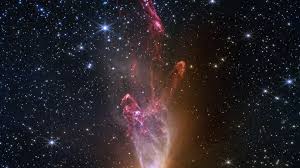
POL 486 Addendum
Arch is a satirical science fiction short story about ERC-1, a rocket launched to preserve human civilization, in a speculative near-future where global nuclear war seems imminent and inevitable. A series of absurd and ironic events, however, leads Earth to accidentally achieve world peace while simultaneously losing contact with ERC-1. The ship continues its mission in isolation for generations. When ERC-1 finally reaches its destination of Proxima Jeanneau 49, it is mistakenly blown up by a missile from the planet’s Astro Defence System. Humanity, having arrived earlier, had mistakenly perceived the rocket as a missile.
The story critiques the contemporary condition of international relations, where global peace (when it does exist) is assumed to be the status quo, and a direct result of nuclear deterrence, international cooperation, and rationalist strategic calculation. Arch subverts these assumptions, highlighting the accidental nature of peace, the structural instability and irrationality of deterrence, and the performative spectacle that often substitutes for true collaboration. Nuclear deterrence is portrayed not as a rational safeguard but as an absurd gamble. By using humour and irony, I wanted to take a step back and highlight how absurd and precarious the state of politics is today, including complicated and inefficient bureaucracies, caricature world leaders, and shady corporate lobbying.
Captain Nora McSmith is an allegorical character for the broad optimism of liberalism. ERC-1 is an allegory for Earth’s current political state of affairs, a “time-capsule”. McSmith sees ERC-1 as a new chapter for humanity (Fukuyama’s End of History), a peaceful mission beyond Earth’s violent past. But the ship itself is a contradiction: an “international” project imperialized by American funding, culture, and violence. As the mission drifts further from Earth, her liberal ideals erode under the weight of the space’s entropy and the unpredictability of the human psyche.
The story also offers a constructivist analysis of peace, portraying it as an illusion sustained by chance, spectacle, and shared myths rather than deliberate human strategy. The so-called ‘New Mexican Missile Miracle’ illustrates that what matters is not the reality of events, but how they are broadcast to the international community. Taking this further, the story critiques frameworks such as the Democratic Peace Theory and exposes the Global North’s tendency to universalize its own constructed narrative, which insists that peace is the default condition, rather than a fragile performance.
Space madness functions as an allegory for Hobbes’ view of human nature, and the realist assumptions of anarchy, a rejection of any central authority — even God. The story rejects the idea that space offers an escape from this condition (an escapist fantasy propagated by people like Elon Musk); instead, it shows that the same anarchy and irrationality persist beyond Earth, inherent to being a human. The desires of the individual remain fundamentally incompatible with the abstract structures of international relations.
The story also critiques rational actor models and assumptions of rationality in game theory by showing how international political outcomes are often a function of randomness, rather than a coherent strategy. Philosophically, the story explores the existential frustration of meaninglessness in a vast, indifferent universe, where even divine or cosmic interventions appear random and absurd. Peace, order, and reason remain elusive, no matter the setting, which I tried to show through the recurring themes of miscommunication.
While not explicitly advocating for realism, in the face of the vastness of space and the human violence that simply never ends, anarchy seems to be the best explanation for the way the world operates. I want to believe that human progress is linear, but sometimes it feels like the arc is bending backward, cyclical like the narrative in Arch.
 𓆰𓆪 Desolation Angel 𓆰𓆪
Leave a comment